


BIX ARTICLE
Wall Street pushes Fed rate cuts into 2027
May 13, 2026
|
5 min read
Featured Posts
Social Bonds Illustrative Use-Of-Proceeds Case Studies Coronavirus
Jul 06, 2020
|
2 min read
Sustainable Banking Network (SBN) Creating Green Bond Markets
Jul 06, 2020
|
2 min read
Why is Inflation Making a Big Comeback After Being Absent for Decades in the U.S.?
Mar 24, 2022
|
7 min read
SC issues Corporate Governance Strategic Priorities 2021-2023
Mar 29, 2022
|
3 min read
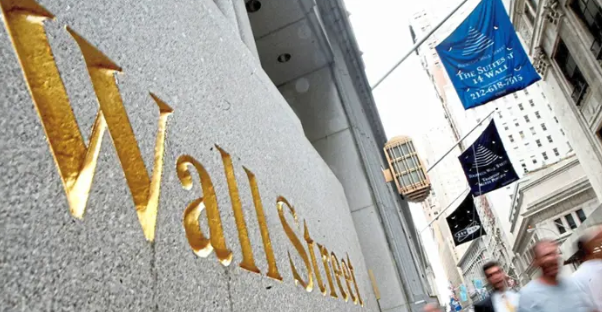
NEW YORK: Goldman Sachs & Co and Bank of America Corp (BofA) are the latest in a growing cohort of Wall Street banks pushing back their forecasts for interest rate cuts, arguing that both jobs and inflation data make a case for the Federal Reserve (Fed) to keep rates on hold until at least the end of the year.
As the US-Israeli war on Iran jolts oil markets and stokes inflation, traders are increasing bets that the Fed will keep policy on hold through 2026, and may even hike in early 2027.
The shift is echoed by a growing number of Fed officials, including two dissenters at the central bank’s last meeting, who said the next move could be an increase.
“The data simply don’t warrant cuts this year,” Aditya Bhave, the head of US economics at Bank of America, wrote in a note.
“Core inflation is too high, and moving up. The solid April jobs report was the last straw, especially given hawkish Fedspeak.”
Bhave and colleagues now expect that the Fed will not cut rates again until July 2027, a shift from their previous forecast of September of this year.
Rising oil prices on Monday catalysed a move lower in treasury prices, higher in treasury yields, with the policy-sensitive two-year yield up more than six basis points to 3.95% as of the time of writing in New York. President Donald Trump said on Monday that the tenuous ceasefire between the United States and Iran is on “massive life support”.
Yields extended their increase after investor demand at the first of the government’s quarterly refunding auctions, a US$58bil sale of three-year notes, fell short of expectations.
A Bloomberg gauge of the US dollar edged higher, as did US stocks.
As part of the Treasury’s quarterly refunding, it will sell another US$42bil worth of 10-year notes and US$25bil of 30-year bonds.
April’s labour report showed that US employers added more jobs than expected for a second month, underscoring the steadiness of the jobs market even as the Middle East conflict continues.
The next major reads of inflation, meanwhile, will come via reports on consumer and producer prices.
The risk of Fed hikes is “underpriced” by traders, BofA’s interest rate strategists separately wrote to clients on Monday.
They recommend selling two-year treasuries and betting that the front-end of the US yield curve will underperform longer-dated maturities.
After the April jobs figures last Friday, a Goldman Sachs team led by Jan Hatzius also pushed back their call for the Fed’s next cut to December 2026 from September. They also lowered their estimate for the probability of a US recession in the next 12 months.
Morgan Stanley and Barclays have also been forecasting an extended pause from the US central bank.
“Everyone knows inflation is going higher, but as it does so, discussion in the coming months will inevitably turn to the following: just how long will it remain elevated, will there be second-round effects, and how much (if any) will central banks raise rates?” Simon White, a macro strategist asked.
Still, others on Wall Street, notably Citigroup economists Andrew Hollenhorst, Veronica Clark and Gisela Young, are holding fast to their expectation that the Fed will cut before the end of year.
They argue that easing by the central bank is underpriced by traders, given lacklustre hiring and wage growth in recent months.
Heading into the release of the consumer price index report, the median expectation of economists surveyed by Bloomberg sees the headline figure rising 3.7% year-on-year, up from 3.3% the month prior.
The core measure, which excludes food and energy prices, is seen rising 2.7% year-on-year.
“This month we’re definitely going to have a bit of a spicier inflation report,” Matt Hornbach, global head of macro strategy at Morgan Stanley, told Bloomberg Surveillance.
“We know oil prices are moving quite a lot every single day and they can have a big influence on the path of inflation into the end of the year.” — Bloomberg
Disclaimer
The information provided in this report is of a general nature and has been prepared for information purposes only. It is not intended to constitute research or as advice for any investor. The information in this report is not and should not be construed or considered as an offer, recommendation or solicitation for investments. Investors are advised to make their own independent evaluation of the information contained in this report, consider their own individual investment objectives, financial situation and particular needs and should seek appropriate personalised financial advice from a qualified professional to suit individual circumstances and risk profile. The information contained in this report is prepared from data believed to be correct and reliable at the time of issuance of this report. While every effort is made to ensure the information is up-to-date and correct, Bond and Sukuk Information Platform Sdn Bhd (“the Company”) does not make any guarantee, representation or warranty, express or implied, as to the adequacy, accuracy, completeness, reliability or fairness of any such information contained in this report and accordingly, neither the Company nor any of its affiliates nor its related persons shall not be liable in any manner whatsoever for any consequences (including but not limited to any direct, indirect or consequential losses, loss of profits and damages) of any reliance thereon or usage thereof.
YOU MAY ALSO LIKE

ARTICLE
Oct 26, 2026
|
4 min read
ARTICLE
Oct 26, 2026
|
2 min read
ARTICLE
Oct 21, 2026
|
3 min read
ARTICLE
Oct 19, 2026
|
6 min read