


BIX ARTICLE
European banks double down on SRT trades
May 28, 2026
|
5 min read
Featured Posts
Social Bonds Illustrative Use-Of-Proceeds Case Studies Coronavirus
Jul 06, 2020
|
2 min read
Sustainable Banking Network (SBN) Creating Green Bond Markets
Jul 06, 2020
|
2 min read
Why is Inflation Making a Big Comeback After Being Absent for Decades in the U.S.?
Mar 24, 2022
|
7 min read
SC issues Corporate Governance Strategic Priorities 2021-2023
Mar 29, 2022
|
3 min read
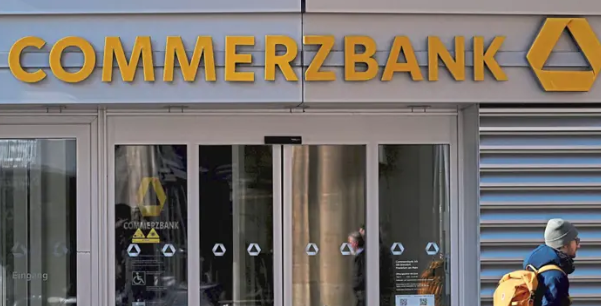
Takeover bid: A pedestrian walks past the Commerzbank building in Frankfurt. Germany’s Commerzbank will cut up to 3,000 jobs as it battles to fend off a hostile takeover bid from Italy’s UniCredit. — AFP
LONDON: Banks are going big on a product that’s drawing ever-closer regulatory scrutiny.
Lenders have stepped up their reliance on so-called significant risk transfer trades (SRTs), complex deals in which banks offload some of the default risk from their loan books to hedge funds and other investors.
SRTs are booming because they help banks free up capital and boost measures of profitability.
But the fast expansion of the market is also prompting authorities to seek greater oversight, and to better understand what risks or contagion could emerge if bad loans surge.
“Rapid growth in SRT issuance naturally attracts regulatory interest, especially in a market lacking standardisation and transparency,” said Bill Ledger, a consultant and former head of the credit portfolio group at JPMorgan Chase & Co.
“While regulators are clearly supportive of such trades, it feels appropriate they consider how banks are managing rollover risk, counterparty risk and the provision of financing to SRT investors,” he said.
Data compiled by Bloomberg showed that about 11.1%, or US$509bil, of corporate loans at Europe’s major banks were tied to SRT trades at the end of last year.
This ratio has nearly doubled since 2022, when it stood at 6.2%.
The US dollar total reflected the portion retained by banks after offloading their exposure to some loan losses.
Hedging European corporate loans through SRTs represents the largest and longest-established part of a broader market. Worth more than US$1.5 trillion, this also spans regions like North America and lending categories such as property and auto loans.
At some banks, the uptake has been even faster. One driver has been to free up capital to fuel growth, either via new lending or through takeovers.
At UniCredit SpA, which is seeking to buy Commerzbank AG in Germany, the ratio has surged to 14% from under 1% in three years.
Austria’s Erste Group Bank AG, which bought control of Banco Santander SA’s Polish unit in its largest-ever acquisition, was another major SRT issuer last year.
Santander ended last year with SRTs hedging risks for 21% of corporate loans.
The Spanish bank kept up a similar pace to 2025 in the first quarter of this year, offloading about €10bil (US$11.6bil) of risk-weighted assets via SRTs.
José García Cantera, the bank’s chief financial officer, told investors in April that investor appetite had grown, despite broader market unrest.
Santander and investors are discussing an SRT tied to roughly €3.3bil of loans, about 40% of which consists of financing for companies in the United States, Bloomberg reported on Tuesday.
“Familiarity breeds scale,” said Frank Benhamou, head of SRT at Cheyne Capital Management UK LLP, a London-based investment firm.
“The more comfortable issuers become with the product, the more systematically they incorporate it into their capital-management toolkit and the more they issue.”
In an SRT, investors agree to shoulder some of the potential losses from soured debts. The agreements often protect banks against the first wave of bad debts in a loan book, and typically cover between 5% and 15% of the overall portfolio.
In return, buyers such as hedge funds, pension funds and private credit funds receive coupons that can top 10%. Deals are typically struck quietly with a single buyer or a handful of investors.
A recent European Central Bank (ECB) working paper identified 65 non-bank investors in SRTs. Together, this group holds nearly two-thirds of the SRTs that European banks issued from 2018 through 2024.
Most SRTs are so-called synthetic securitisations, where a bank keeps the original loans and effectively obtains insurance, often by issuing an instrument known as a credit-linked note.
More than €1.3 trillion of assets – equivalent to about US$1.5 trillion – were synthetically securitised between 2016 and 2024, the International Association of Credit Portfolio Managers said in July.
A smaller share of deals are traditional securitisations, in which loans are shifted off the bank’s balance sheet.
European banks have taken the lead in using SRTs, encouraged by direction from regulators, including ECB guidance issued in 2016.
US lenders such as JPMorgan Chase and Bank of America Corp have also issued SRTs, but a shift toward looser capital US requirements has reduced banks’ incentives to do more deals.
Trades often involve corporate loans, but banks are stepping up SRTs backed by mortgages, credit cards and other kinds of debt.
SRTs based on loans to corporations or smaller businesses made up 47% and 14%, respectively, of all issuance in 2025, according to data compiled by Crescent Capital Group LP, a unit of Sun Life Financial Inc.
Aside from business loans, banks are most interested in issuing SRTs tied to commercial and residential property debt, auto loans and AI-related project finance, according to a Bloomberg Intelligence survey published in March.
Institutions such as the Bank of England, ECB and the Bank for International Settlements have warned about potential dangers. — Bloomberg
Disclaimer
The information provided in this report is of a general nature and has been prepared for information purposes only. It is not intended to constitute research or as advice for any investor. The information in this report is not and should not be construed or considered as an offer, recommendation or solicitation for investments. Investors are advised to make their own independent evaluation of the information contained in this report, consider their own individual investment objectives, financial situation and particular needs and should seek appropriate personalised financial advice from a qualified professional to suit individual circumstances and risk profile. The information contained in this report is prepared from data believed to be correct and reliable at the time of issuance of this report. While every effort is made to ensure the information is up-to-date and correct, Bond and Sukuk Information Platform Sdn Bhd (“the Company”) does not make any guarantee, representation or warranty, express or implied, as to the adequacy, accuracy, completeness, reliability or fairness of any such information contained in this report and accordingly, neither the Company nor any of its affiliates nor its related persons shall not be liable in any manner whatsoever for any consequences (including but not limited to any direct, indirect or consequential losses, loss of profits and damages) of any reliance thereon or usage thereof.
YOU MAY ALSO LIKE

ARTICLE
May 28, 2026
|
5 min read
ARTICLE
May 28, 2026
|
5 min read
ARTICLE
May 22, 2026
|
4 min read
ARTICLE
May 21, 2026
|
3 min read