


BIX ARTICLE
Tariff ruling fuels US$30 trillion bond-market angst by hitting US deficit
Feb 23, 2026
|
5 min read
Featured Posts
Social Bonds Illustrative Use-Of-Proceeds Case Studies Coronavirus
Jul 06, 2020
|
2 min read
Sustainable Banking Network (SBN) Creating Green Bond Markets
Jul 06, 2020
|
2 min read
Why is Inflation Making a Big Comeback After Being Absent for Decades in the U.S.?
Mar 24, 2022
|
7 min read
SC issues Corporate Governance Strategic Priorities 2021-2023
Mar 29, 2022
|
3 min read
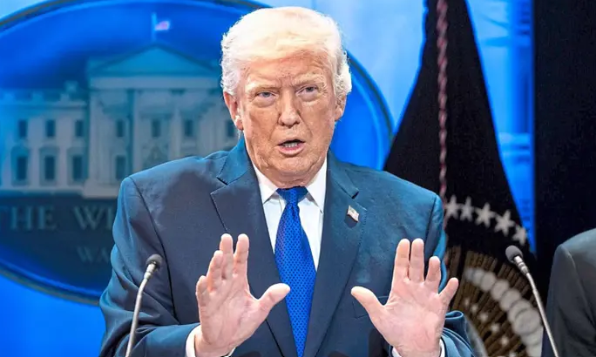
US President Donald Trump during a news conference in the James S. Brady Press Briefing Room of the White House in Washington, DC, US, on Friday, Feb. 20, 2026. Trump delivered a broadside against Supreme Court justices after they struck down the bulk of his sweeping global tariffs, delivering a major blow against his signature economic policy. Photographer: Bonnie Cash/UPI/Bloomberg
|
The drop was led by longer-dated bonds most exposed to the fiscal risks in the years ahead, which pushed 30-year Treasury yields up as much as six basis points to 4.75%, before paring the gain. The dollar dropped, snapping a four-day advance.
The top court’s verdict eliminates import taxes that have acted as a restraint on the government’s US$1.8 trillion budget deficit and the swelling national debt.
It also removes a source of uncertainty that has exerted a drag on the economy as global supply chains were upended and businesses waited to see if Trump’s tariffs would pass legal scrutiny.
Trump said he planned to manoeuvre around the ruling by using other authority to impose tariffs that could raise even more than those that were ruled illegal.
While he said he would approve a new 10% global tariff, the long-term outlook still remained unclear, given that the provisions of the law he invoked involve temporary duties.
“It’s a short-term vehicle,” said Gregory Faranello, head of US rates trading and strategy for AmeriVet Securities. “The devil will be in the details with various trade deals to date.”
The reaction was relatively contained because traders have largely anticipated the decision since the justices expressed scepticism about the administration’s arguments.
The Tax Foundation estimated that the tariffs at issue in last Friday’s verdict would have raised over US$1 trillion over the next decade.
Treasury Secretary Scott Bessent said last Friday that new measures to be taken by the administration would offset the fiscal impact and leave tariff revenue virtually unchanged in 2026.
But in the short-term, it’s possible that the government will need to increase the pace of its Treasury bill (T-bill) sales to cover any shortfalls.
Moreover, the Supreme Court left it to a lower court to sort out how to handle potential refunds of the US$170bil collected under the now-defunct tariffs.
“The revenue shortfall created by the tariff strike-down will very likely be funded via T-bill issuance, which should add incremental pressure to US dollar repo markets,” said Angelo Manolatos, rates strategist at Wells Fargo.
“How quickly – and to what extent – the lost revenue can be offset through alternative tariff measures will determine the amount of additional T-bill issuance required.”
Alyce Andres, Bloomberg’s markets live macro strategist said it’s well-advertised that Trump has at least five fallback options to impose tariffs in different ways.
“If he were to choose a lighter touch on tariffs, that would lessen any real or perceived inflation threat and bode well for his affordability campaign. In any case, either scenario would put a cap on long-bond yields.”
Several Federal Reserve (Fed) policymakers have expressed concerns about resuming interest-rate cuts.
After easing policy late last year, the Fed has since paused as the labour market shows signs of stabilising and the economy continues to expand at a solid pace.
While the tariff ruling has the potential to allay concerns about inflation stemming directly from them, giving the Fed more freedom to cut rates, that factor is less important to the market than the potential deficit impact and the relief the ruling provides to companies, said Blake Gwinn, head of US rates strategy at RBC Capital Markets.
The ruling is “a growth-positive, risk-positive story,” Gwinn said. That should “overwhelm any idea that yields should be lower on lower inflation or allowing the Fed to cut.” — Bloomberg
Disclaimer
The information provided in this report is of a general nature and has been prepared for information purposes only. It is not intended to constitute research or as advice for any investor. The information in this report is not and should not be construed or considered as an offer, recommendation or solicitation for investments. Investors are advised to make their own independent evaluation of the information contained in this report, consider their own individual investment objectives, financial situation and particular needs and should seek appropriate personalised financial advice from a qualified professional to suit individual circumstances and risk profile. The information contained in this report is prepared from data believed to be correct and reliable at the time of issuance of this report. While every effort is made to ensure the information is up-to-date and correct, Bond and Sukuk Information Platform Sdn Bhd (“the Company”) does not make any guarantee, representation or warranty, express or implied, as to the adequacy, accuracy, completeness, reliability or fairness of any such information contained in this report and accordingly, neither the Company nor any of its affiliates nor its related persons shall not be liable in any manner whatsoever for any consequences (including but not limited to any direct, indirect or conse
YOU MAY ALSO LIKE

ARTICLE
Oct 07, 2026
|
3 min read
ARTICLE
Oct 01, 2026
|
5 min read
ARTICLE
Sep 29, 2026
|
6 min read
ARTICLE
Sep 29, 2026
|
3 min read