


BIX ARTICLE
Making sense of the Trump Treasury’s odd FX intervention
Aug 05, 2026
|
5 min read
Featured Posts
Social Bonds Illustrative Use-Of-Proceeds Case Studies Coronavirus
Jul 06, 2020
|
2 min read
Sustainable Banking Network (SBN) Creating Green Bond Markets
Jul 06, 2020
|
2 min read
Why is Inflation Making a Big Comeback After Being Absent for Decades in the U.S.?
Mar 24, 2022
|
7 min read
SC issues Corporate Governance Strategic Priorities 2021-2023
Mar 29, 2022
|
3 min read
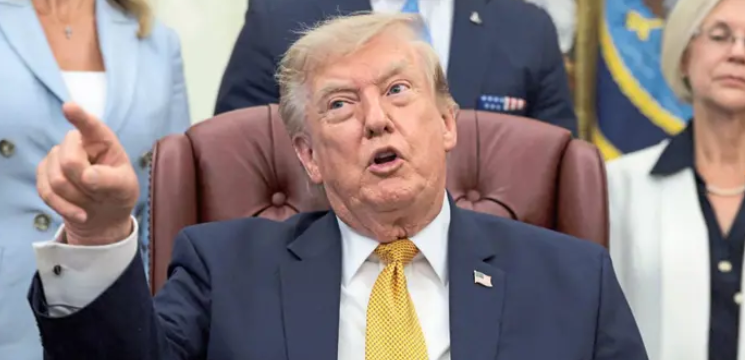
US President Donald Trump. — Reuters
The US Treasury’s foray into the foreign exchange (FX) market last Friday to buy Japanese yen wasn’t its first FX intervention and won’t be its last.
But it was one of its most unusual.
Last Sunday, President Donald Trump’s administration acknowledged it had intervened alongside Japan last Friday to prop up the flailing yen, which had weakened to a 40-year low of almost 164 against the dollar.
This was Washington’s first intervention in the FX market since 2011, when, together with Group of Seven partners, it sold yen to stop the Japanese currency from strengthening too much.
Last Friday marked the US Treasury’s first yen-buying intervention since 1998, and its first FX intervention with just one other country, as opposed to action in coordination with multiple central banks, during that period.
But even if Washington’s aims were conventional – correcting what it deems to be excessive volatility and a fundamental exchange rate misalignment – the methods were anything but.
First off, the Treasury gave currency traders at several banks a heads-up that it might intervene in a certain currency during a specific time frame.
This removes the element of surprise, which is a powerful weapon in FX intervention.
Treasury also funded these yen purchases via a third currency, in this case euros, rather than US dollars.
Again, that’s an unusual move. If that weren’t enough, there was the bizarre sideshow of Treasury secretary Scott Bessent’s yen purchase “to do” list.
During the on-the-record portion of Trump’s cabinet meeting last Friday at Camp David, a Reuters photographer snapped an image of Bessent’s notepad that said “To Do” followed by “Buy Japanese Yen (JPY) US$5bil to US$10bil.”
Did Bessent jot this down, including the yen’s FX trading code ‘JPY’ and specific amount, in case he forgot?
Moreover, a kitty of five to 10 billion euros or dollars is tiny – Japan is estimated to have spent over US$36bil in last Friday’s joint intervention.
It may have sold nearly US$60bil buying yen on July 30, and over US$70bil earlier this year.
Bessent is a former hedge fund manager who spent decades trading currencies. He helped billionaire George Soros “break” the Bank of England by successfully betting against sterling in 1992.
It’s highly unlikely that he would need a post-it note to remind him to take such a rare and consequential policy step.
But Bessent is doing things differently from his predecessors – witness the Treasury’s direct purchase of Argentine pesos last year.
Perhaps this latest “photo op” was just another unorthodox tactic?
Steven Englander, head of G10 FX strategy at Standard Chartered, says it’s hard to figure out the Treasury’s motivation for getting involved now, especially after the Bank of Japan refrained from raising interest rates earlier last Friday.
It’s not as if the yen, although extremely weak, is the US’s most pressing trade issue.
“It’s a puzzler,” Englander says.
“And if you want to intervene you don’t need the choreography.”
Head-scratcher
So why did they do it? This FX exercise could be the latest tactic in the White House’s long-stated goal of weakening the dollar to help reduce the chronic US trade deficit, making America more competitive again.
The dollar has fallen as much as 5% against the yen since last Friday’s intervention.
And in his social media post last Sunday, Bessent noted the yen’s “substantial undervaluation”.
If weakening the dollar was a key aim, however, one might ask why the Treasury chose to use euros to fund these purchases instead of dollars.
Here, the bond market may have figured in Bessent’s thinking as much as the FX market.
Long-dated US Treasury yields are currently the highest since 2007, which is driving up US mortgage rates, and the benchmark 10-year Treasury yield is climbing too.
Bessent has previously underscored the importance of not allowing bond yields to rise too high.
The optics of the US selling even small quantities of dollar-denominated assets to support a foreign currency might have been unwelcome.
Japan is the world’s largest single holder of US bonds.
Using the US Federal Reserve’s “Fima” repurchase agreement facility for FX intervention relieves pressure on Tokyo to sell Treasuries as well.
In that light, it’s worth noting that Japan’s Treasuries holdings fell by nearly US$67bil in May to US$1.14 trillion.
That was the biggest monthly decline since September 2022 and the third biggest on record.
Extreme weakness in the yen and US bond markets is a dangerous cocktail, which could spill over into global assets and potentially require an even bigger response from authorities.
One can see why Washington is keen to mitigate that risk, no matter how unconventional its methods. — Reuters
Jamie McGeever is a columnist for Reuters. The views expressed here are the writer’s own.
Disclaimer
YOU MAY ALSO LIKE

ARTICLE
Oct 09, 2026
|
4 min read
ARTICLE
Oct 07, 2026
|
3 min read
ARTICLE
Oct 01, 2026
|
5 min read
ARTICLE
Sep 29, 2026
|
6 min read