


BIX ARTICLE
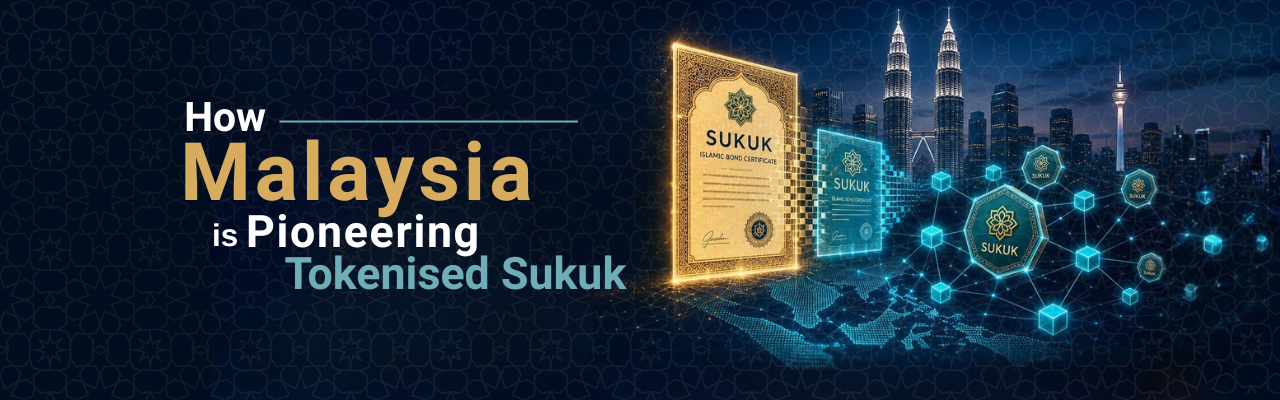
How Malaysia is Pioneering Tokenised Sukuk
Jul 21, 2026
|
6 min read
Featured Posts
Social Bonds Illustrative Use-Of-Proceeds Case Studies Coronavirus
Jul 06, 2020
|
2 min read
Sustainable Banking Network (SBN) Creating Green Bond Markets
Jul 06, 2020
|
2 min read
Why is Inflation Making a Big Comeback After Being Absent for Decades in the U.S.?
Mar 24, 2022
|
7 min read
SC issues Corporate Governance Strategic Priorities 2021-2023
Mar 29, 2022
|
3 min read
Introduction
In April 2026, the Malaysian capital market crossed a new frontier. Khazanah Nasional Berhad, the country’s sovereign wealth fund, priced a RM100 million sukuk whose ownership interests are represented digitally on a blockchain-based platform rather than through traditional physical certificates. Instead, investors' interests in the sukuk are digitally represented on a blockchain-based platform.
How Tokenised Sukuk Work
This transaction, executed in collaboration with Securities Commission Malaysia (SC), marks the country’s first on-shore tokenised sukuk. Tokenisation is the process of issuing a traditional security in this case, a Shariah-compliant sukuk on a Distributed Ledger Technology (DLT) platform. In addition to the conventional settlement infrastructure, the sukuk is represented by a cryptographic token on a permissioned blockchain. Crucially, this does not replace the legal framework where the token is a digital representation of the underlying asset.
Why Tokenised Sukuk Matters from a Market-Development Perspective
Beyond operational efficiencies, tokenisation has the potential to broaden investor participation, improve transparency and support innovation in capital market infrastructure. Over time, digital issuance models may contribute to lower processing costs and greater accessibility for both issuers and investors, subject to regulatory safeguards and market readiness.
The Landmark Deal: Key Players for First Tokenised Sukuk in Malaysia
Issuer: Khazanah Nasional Berhad (via Danum Capital)
Regulator: Securities Commission Malaysia
Lead Arrangers: CIMB Group and Maybank
Technology Provider: V Systems Malaysia (Aeris Chain)
Investors: KWAP, CGC, OCBC
The one-year tokenised Sukuk (IDBOND) was structured under Wakalah bi al-Istithmar (an agency investment contract).
Why Go Digital? Three Key Benefits
- 24/7 Transparency: Investors can view their holdings and the bond’s status in near real-time via the blockchain ledger.
- Reduced Reconciliation: Blockchain creates a single source of truth, reducing reconciliation requirements among stakeholders by providing a shared and synchronised ledger.
- A Scalable Template: The SC framed this as a pilot template, demonstrating the potential for broader adoption of digital issuance structures by corporate issuers.
The Regulatory Backbone
The transaction aligns with Securities Commission Malaysia's broader objectives under the Capital Market Masterplan 2026–2030. In parallel, Bank Negara Malaysia (BNM) launched the Digital Asset Innovation Hub (DAIH) in June 2025 to facilitate the testing of digital asset use cases in a controlled environment. Among the initiatives admitted to the hub are tokenised deposit projects by CIMB and Maybank, and a ringgit stablecoin project involving Standard Chartered Bank Malaysia and Capital A. The initiatives include exploring payment and settlement applications for tokenised assets, which could help inform future policy and market infrastructure development.
Example in BIX Malaysia
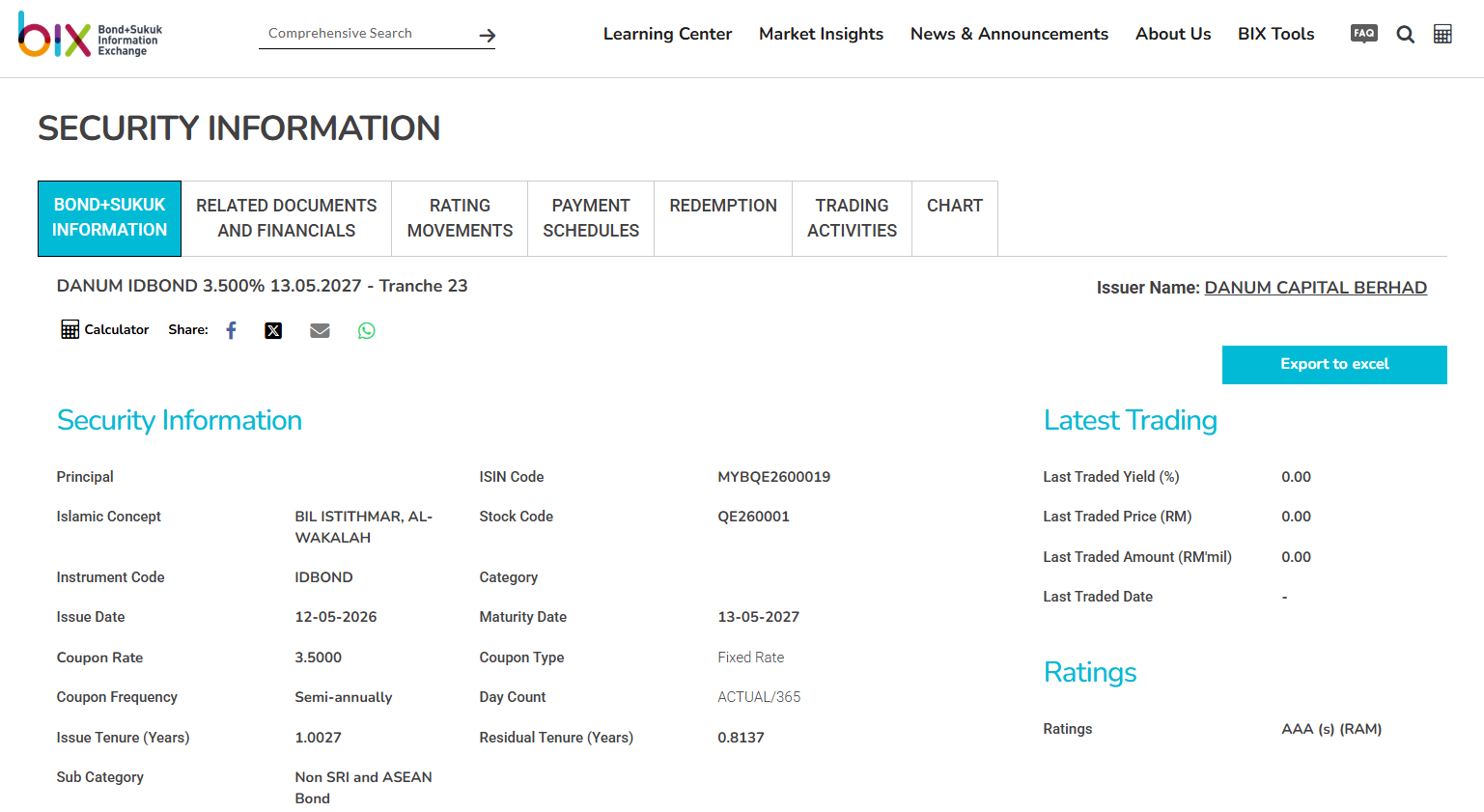
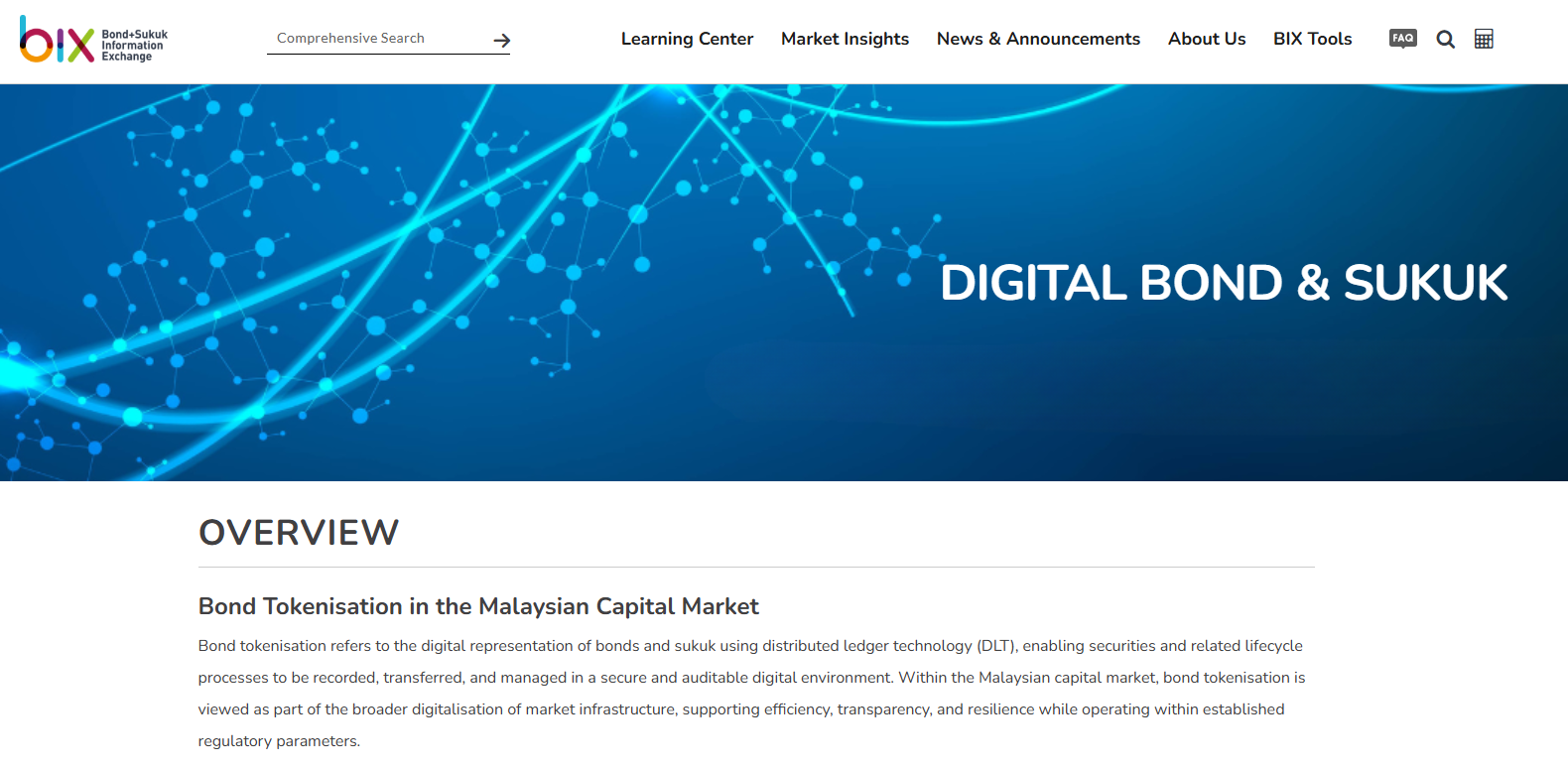
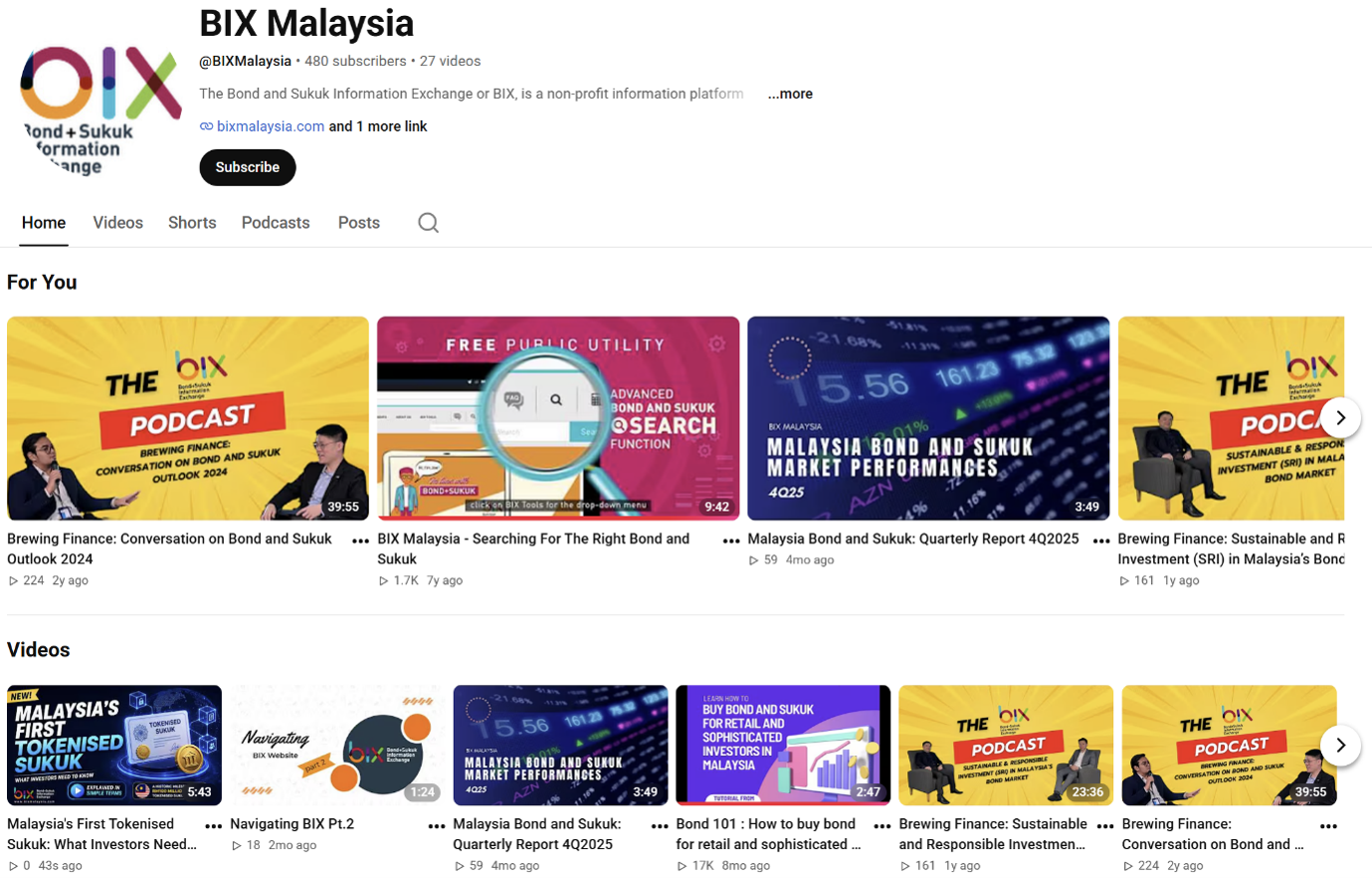
BIX also has published educational video about tokenised bond/sukuk to give more exposure and information about how tokenised bond/sukuk works. This video can be found in BIX Malaysia Video and Audio gallery or in BIX Malaysia Youtube channel.
Future Case Study: Fractional Ownership for Retail Investors
While many sukuk investments today are primarily accessible to institutional and sophisticated investors due to minimum investment thresholds, tokenisation offers the potential to enable fractional ownership and wider participation, subject to future regulatory and market developments.
Imagine this: A company issues a RM50 million Green Sukuk, digitised into 1 million tokens worth RM50 each. In a future retail-oriented framework, a retail investor could potentially purchase RM500 worth through a digital investment platform. A smart contract automatically distributes periodic profit payments directly to their wallet, and the token is tradeable on a secondary market. This is the roadmap that the Khazanah pilot is laying the plumbing for.
Shariah Compliance in Code
Digital bonds & sukuk offer a significant advantage for Islamic finance: auditability. Shariah-compliant structures typically require adherence to principles governing ownership rights, transparency, contractual certainty and the avoidance of Riba. In a digital bond, these rules can be programmed into the smart contract. As Maybank’s Group Chief Digital Officer stated, "By leveraging smart contracts, we can programmatically embed Shariah rules directly into the instrument, ensuring end-to-end transparency." Although technology can automate certain compliance processes, Shariah governance and oversight remain essential.
Conclusion
Malaysia's RM100 million pilot demonstrates the practical feasibility of a legal, Shariah-compliant and technology-enabled framework for digital sukuk. By choosing a permissioned, private blockchain (Aeris Chain) integrated with existing central bank systems (RENTAS), regulators have avoided cryptocurrency volatility while capturing blockchain efficiency. For the global Islamic finance industry, Malaysia has provided a live, functional template offering fractional ownership, automated compliance, and a clear path toward mainstream adoption.
Disclaimer
This report has been prepared and issued by Bond and Sukuk Information Platform Sdn Bhd (“the Company”). The information provided in this report is of a general nature and has been prepared for information purposes only. It is not intended to constitute research or as advice for any investor. The information in this report is not and should not be construed or considered as an offer, recommendation or solicitation for investments. Investors are advised to make their own independent evaluation of the information contained in this report, consider their own individual investment objectives, financial situation and particular needs and should seek appropriate personalised financial advice from a qualified professional to suit individual circumstances and risk profile.
The information contained in this report is prepared from data believed to be correct and reliable at the time of issuance of this report. While every effort is made to ensure the information is up-to-date and correct, the Company does not make any guarantee, representation or warranty, express or implied, as to the adequacy, accuracy, completeness, reliability or fairness of any such information contained in this report and accordingly, neither the Company nor any of its affiliates nor its related persons shall not be liable in any manner whatsoever for any consequences (including but not limited to any direct, indirect or consequential losses, loss of profits and damages) of any reliance thereon or usage thereof.
YOU MAY ALSO LIKE

ARTICLE
Oct 09, 2026
|
16 min read
ARTICLE
Oct 07, 2026
|
3 min read
ARTICLE
Sep 29, 2026
|
6 min read
ARTICLE
Sep 28, 2026
|
13 min read