


BIX ARTICLE
Global investors bet on ‘rising star’ Malaysia
Feb 06, 2026
|
5 min read
Featured Posts
Social Bonds Illustrative Use-Of-Proceeds Case Studies Coronavirus
Jul 06, 2020
|
2 min read
Sustainable Banking Network (SBN) Creating Green Bond Markets
Jul 06, 2020
|
2 min read
Why is Inflation Making a Big Comeback After Being Absent for Decades in the U.S.?
Mar 24, 2022
|
7 min read
SC issues Corporate Governance Strategic Priorities 2021-2023
Mar 29, 2022
|
3 min read
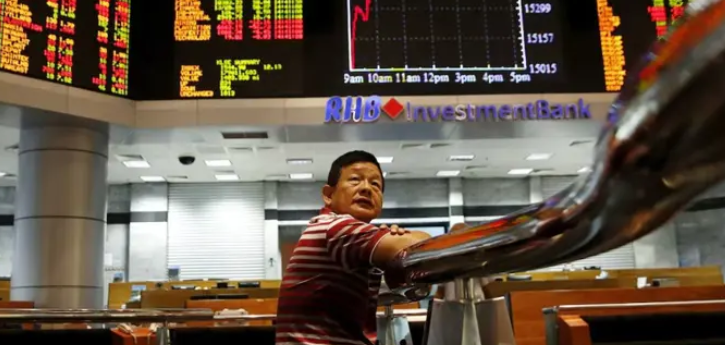
Just last week, Goldman Sachs raised its rating on Malaysian stocks while lowering its view on Indonesia. — Reuters
|
The increasing flow of foreign money illustrates a comeback for Malaysia, South-East Asia’s fourth-largest economy, after years of relative underperformance compared to its peers.
But analysts are now increasingly bullish about the country’s blend of steady economic growth, stable government, and a strengthening currency that is back to near its 2018 high.
Foreign investors poured US$6.5bil into local currency debt in 2025, the largest annual inflow in four years and the highest in the region, with demand staying firm in January.
Malaysia stands in a “sweet spot between low-yielders, such as Singapore, Thailand, and South Korea, and high-yielders such as Indonesia and India, which come with their own set of risks,” said Rong Ren Goh, a fixed income portfolio manager at Eastspring Investments.
Prolonged political turmoil in Thailand, the region’s second-largest economy, and eroding investor faith in Indonesia, South-East Asia’s largest economy, have also helped draw investor interest to Malaysia.
Just last week, Goldman Sachs raised its rating on Malaysian stocks while lowering its view on Indonesia.
“We find the macro, thematic, and positioning backdrop of Malaysia appears more favourable and warrants a more constructive stance,” said Timothy Moe, the bank’s chief Asia Pacific strategist.
Malaysia’s benchmark stock index is up 12% in the past 12 months and last week rose to its highest since October 2018, as investors bet on an artificial intelligence (AI)-driven data centre boom.
During the same period, Thai stocks gained only 3% while Indonesia gained 15%.
Malaysia has drawn billions of dollars in data centre investments from US technology giants, including Amazon Inc, and Microsoft. It has the biggest data centre project pipeline in South-East Asia, an analysis by energy consultancy Wood Mackenzie showed.
“Malaysia is a rising star, driven by the AI cycle and substantial gain in market share of certain semiconductors and chips,” said Samsara Wong, Asian sovereign analyst with PineBridge Investments.
“As long as the AI story is there, Malaysia will remain a beneficiary.”
Another pillar of Malaysia’s appeal is the ringgit, which has gained about 17% since the start of 2024, the best-performing Asian currency in the period. Last week, it rose to its strongest against the US dollar since May 2018 at 3.915.
Over the past 18 months, Eastspring has turned more constructive on the Malaysian ringgit, Rong Ren said, improving the return outlook for its bonds, which has underpinned its “overweight” position in bonds and currency.
The blistering performance in Malaysian assets comes as the economy charges on, shrugging off the impact from US tariffs.
The economy likely expanded 4.9% in 2025, official advance estimates released last month showed, beating the government and central bank’s projections.
It also comes after a period of political volatility over the past decade that changed after Prime Minister Datuk Seri Anwar Ibrahim took office in late 2022, forging a unity government that restored a measure of stability.
Policies aimed at narrowing the fiscal deficit, now at 3.8% from an average of 6% during the Covid-19 pandemic, and a central bank that has not had to shift rates too much compared with neighbours have helped the country stand out in the region.
To be sure, a strong currency could weigh on Malaysia’s exports and hurt its burgeoning tourism industry.
But Malaysia’s appeal should further improve as the United States is widely expected to cut rates at least twice this year while the Malaysian central bank should hold them steady amid strong growth.
That is likely to keep the ringgit strong and make Malaysian bonds attractive. UBS expected the currency to hit 3.80 per dollar by the end of 2026 on strong foreign direct investments, robust trade balance and narrowing interest rate differential. — Reuters
Disclaimer
The information provided in this report is of a general nature and has been prepared for information purposes only. It is not intended to constitute research or as advice for any investor. The information in this report is not and should not be construed or considered as an offer, recommendation or solicitation for investments. Investors are advised to make their own independent evaluation of the information contained in this report, consider their own individual investment objectives, financial situation and particular needs and should seek appropriate personalised financial advice from a qualified professional to suit individual circumstances and risk profile. The information contained in this report is prepared from data believed to be correct and reliable at the time of issuance of this report. While every effort is made to ensure the information is up-to-date and correct, Bond and Sukuk Information Platform Sdn Bhd (“the Company”) does not make any guarantee, representation or warranty, express or implied, as to the adequacy, accuracy, completeness, reliability or fairness of any such information contained in this report and accordingly, neither the Company nor any of its affiliates nor its related persons shall not be liable in any manner whatsoever for any consequences (including but not limited to any direct, indirect or consequential losses, loss of profits and damages) of any reliance thereon or usage thereof.
YOU MAY ALSO LIKE

ARTICLE
Oct 07, 2026
|
3 min read
ARTICLE
Oct 01, 2026
|
5 min read
ARTICLE
Sep 29, 2026
|
6 min read
ARTICLE
Sep 29, 2026
|
3 min read