


BIX ARTICLE
China’s one trillion trade surplus: Turning tariffs into gain
Dec 12, 2025
|
5 min read
Featured Posts
Social Bonds Illustrative Use-Of-Proceeds Case Studies Coronavirus
Jul 06, 2020
|
2 min read
Sustainable Banking Network (SBN) Creating Green Bond Markets
Jul 06, 2020
|
2 min read
Why is Inflation Making a Big Comeback After Being Absent for Decades in the U.S.?
Mar 24, 2022
|
7 min read
SC issues Corporate Governance Strategic Priorities 2021-2023
Mar 29, 2022
|
3 min read
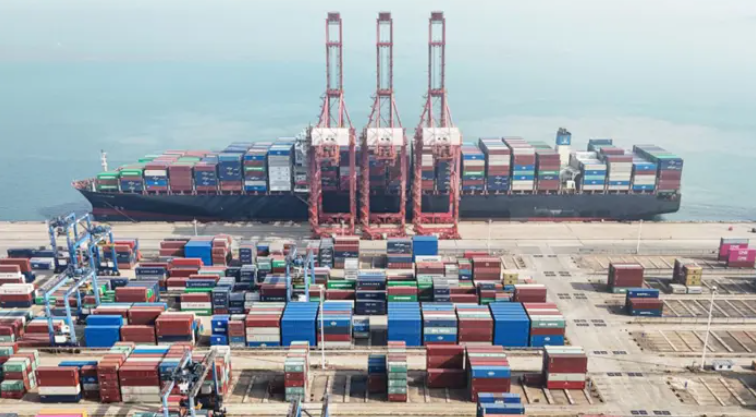
China’s export resilience is increasingly rooted in advanced industries where it has established formidable competitive advantages. — AFP
|
CHINA’S continued export expansion this year underscores a fundamental shift in the global trading system, one that tariffs alone cannot reverse.
Despite steep United States duties under President Donald Trump’s renewed protectionist agenda, China’s goods trade surplus for the first 11 months of the year reached an unprecedented US$1.076 trillion, crossing the trillion-dollar threshold for the first time.
The November 2025 figures tell total exports rose by 5.9% year-on-year even.
China’s ability to withstand such a dramatic contraction in its traditional anchor market while still maintaining overall export growth reflects not only the depth of its manufacturing base, but also a broader reordering of global demand toward Europe, South-East Asia and the wider Global South.
This diversification is neither sudden nor accidental.
Over the past decade, China has woven itself into supply chains across Europe and Asean, becoming indispensable to the production of machinery, electronics and renewable-energy equipment.
As exports to the United States plunged by nearly 29% in November, shipments to other major markets surged, exports to the European Union grew by 14.8% and those to Asean by 8.2 % in November alone.
These trends reflect deeper structural dependencies. Europe now relies heavily on Chinese components to support its energy transition, while South-East Asia depends on Chinese machinery and intermediate goods to fuel rapid industrial upgrading.
US tariffs may divert some bilateral flows, but they leave intact China’s centrality in the global production networks that underpin these transformations.
Navigating this new landscape demands strategic clarity from policymakers and measured restraint from major powers.
Viewing China’s surplus solely as a trade imbalance risk overlooking the deeper realignments reshaping the global economy.
Escalating tariff wars would only deepen fragmentation at a moment when coordinated action is urgently needed: to tackle climate change, technological disruption and supply-chain vulnerabilities.
Managed wisely, however, this next phase of global trade could generate broad-based, sustainable gains for all.
China has also simultaneously accelerated efforts to diversify its import sources, especially for agricultural and food commodities.
This shift reflects a deliberate strategy to reduce vulnerability to supply disruptions and political tensions.
In 2025, China increased imports of soybeans, crude oil and iron ore, with soybean purchases rising 13.4% year-on-year to 8.11 million tonnes, driven primarily by strong inflows from Brazil and other Latin American suppliers.
China also expanded imports of beef and seafood from Brazil, Argentina, and Peru to meet fast-growing domestic consumption.
This reorientation toward Latin America strengthens China’s food and resource security and provides Beijing with strategic insulation against future tariff escalations or supply chain shocks.
Within this evolving landscape, Asean has become a critical shock absorber for China’s export engine.
The region’s expanding manufacturing capacity, large consumer markets and increasingly dense trade and investment ties with China have created a smooth, high-volume flow of intermediate and final products.
Vietnam, Thailand, Malaysia and Indonesia are now central to “China+1” production strategies, in which Chinese firms shift certain stages of manufacturing abroad while keeping control of high-value inputs, technologies and design.
This has driven a surge in intra-regional trade, particularly in electronics, automotive components and renewable-energy equipment. Far from displacing China, Asean’s rise has reinforced China’s export ecosystem, allowing Chinese firms to scale production, reduce cost pressures and diversify risk in the face of geopolitical uncertainty.
China’s export resilience is increasingly rooted in advanced industries where it has established formidable competitive advantages.
Electric vehicles, solar panels, semiconductors, industrial robotics, batteries and digital-technology hardware now form the backbone of China’s export machine.
These sectors benefit from unmatched economies of scale, dense supplier ecosystems and years of state-backed industrial upgrading.
The result is a level of cost efficiency, technological sophistication and production speed that even major Western economies, slower to implement industrial policy and wary of deepening dependence, struggle to match.
This helps explain why analysts now expect China’s share of global exports to rise to 16.5% by 2030, reflecting both momentum and China’s ascent up the global value chain. — The Jakarta Post/ANN
Lili Yan Ing is secretary general of the International Economic Association. The views expressed here are the writer’s own.
Article By LILI YAN ING
Disclaimer
The information provided in this report is of a general nature and has been prepared for information purposes only. It is not intended to constitute research or as advice for any investor. The information in this report is not and should not be construed or considered as an offer, recommendation or solicitation for investments. Investors are advised to make their own independent evaluation of the information contained in this report, consider their own individual investment objectives, financial situation and particular needs and should seek appropriate personalised financial advice from a qualified professional to suit individual circumstances and risk profile. The information contained in this report is prepared from data believed to be correct and reliable at the time of issuance of this report. While every effort is made to ensure the information is up-to-date and correct, Bond and Sukuk Information Platform Sdn Bhd (“the Company”) does not make any guarantee, representation or warranty, express or implied, as to the adequacy, accuracy, completeness, reliability or fairness of any such information contained in this report and accordingly, neither the Company nor any of its affiliates nor its related persons shall not be liable in any manner whatsoever for any consequences (including but not limited to any direct, indirect or consequential losses, loss of profits and damages) of any reliance thereon or usage thereof.
YOU MAY ALSO LIKE

ARTICLE
Oct 16, 2026
|
5 min read
ARTICLE
Oct 09, 2026
|
4 min read
ARTICLE
Oct 07, 2026
|
3 min read
ARTICLE
Oct 01, 2026
|
5 min read